

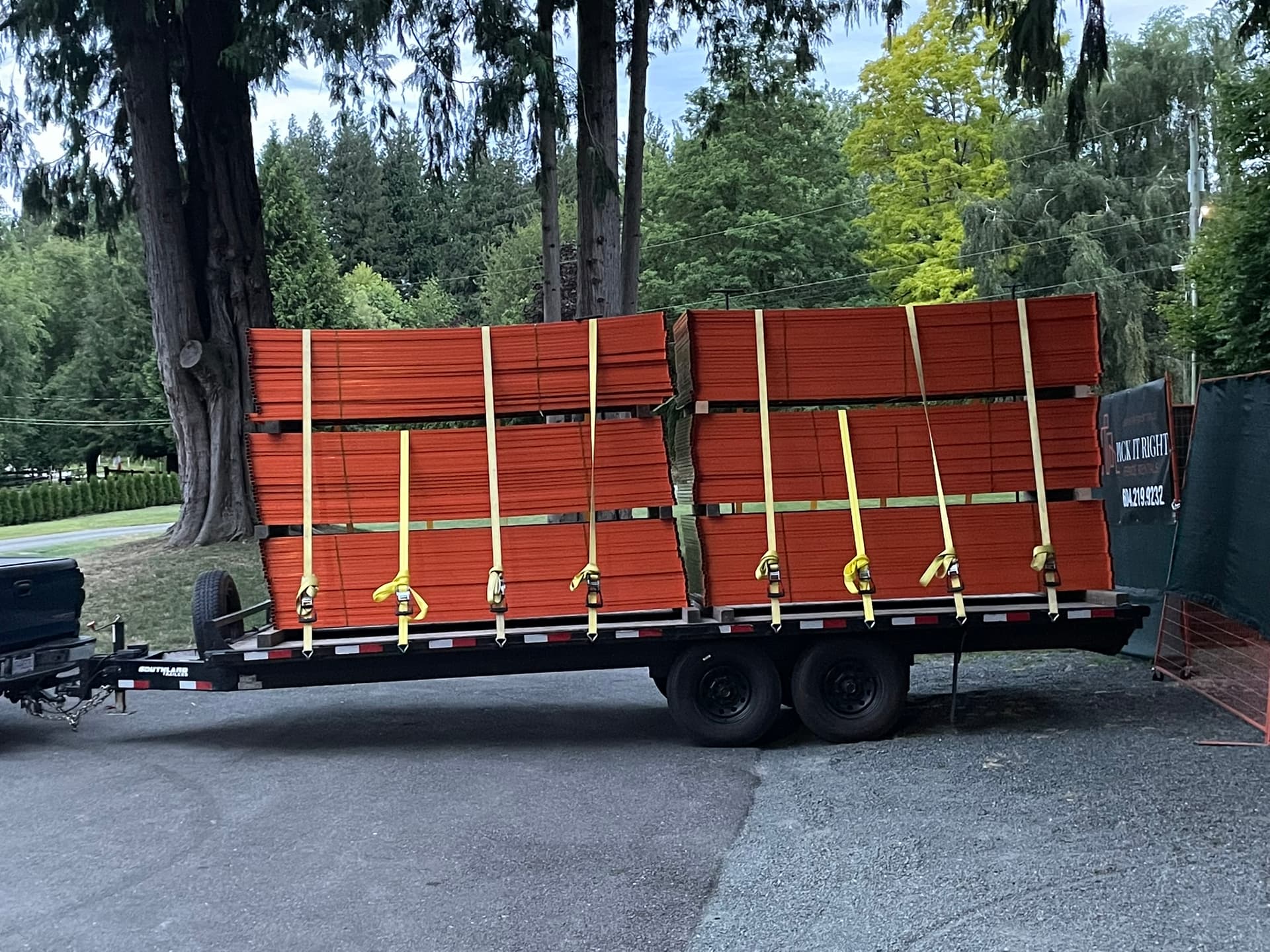
Why Fence Stability Is a Real Problem
A temporary fence is only doing its job if it's standing up. On exposed Lower Mainland job sites — and especially in windier corridors — lightweight bases let panels lean, sail, and topple. That's a blocked sidewalk, an exposed site, and a liability headache waiting to happen.
The base is what matters
Most fence failures aren't the panels — they're the bases. Our heavy-duty bases are the most stable in the industry and hold securely in wind up to roughly 50 km/h. On exposed or long runs we add:
- Extra base plates at panel joints
- Ground spikes where the surface allows
- Bracing at corners and gates, the highest-stress points
When to step up your setup
- Long open perimeters with nothing blocking the wind
- 8-foot panels shown here, which catch more wind than 4- or 6-foot
- [Privacy/debris screening](/equipment/privacy-screening) — great for dust control, but it turns the fence into a sail, so it needs stronger bases and bracing
We handle the engineering judgment
You don't have to guess. Our crew sizes the bases and bracing to your site and installs about 300 feet per hour, so the perimeter is secured the same day.
See our temporary fencing service, the heavy-duty fence bases we use, or request a quote.
Related Topics
Have Questions?
Our team is here to help with your fencing and sanitation needs.